
Best Fire Pits for Decks: The Heat Shield Question
The Solo Stove Yukon is advertised as the ultimate deck-friendly smokeless pit, but is it really? I've lived with one on my cedar deck for two full winters now, and here's the truth: it's brilliant, it's overpriced, and it will absolutely scorch the wood under it if you don't respect what it does.
Well, that got your attention. Let me back up a bit.
I'm Caleb, and I've been installing and burning fire pits for fifteen years. My deck is a 12x16 cedar platform that's seen better days, and it's the testing ground for everything I recommend. I've got a 65-pound lab mix named Gus who parks himself within two feet of whatever's burning, and he's the real durability test. If a pit can survive Gus, it can survive a Minnesota winter.
Here's the short list before I get into the weeds:
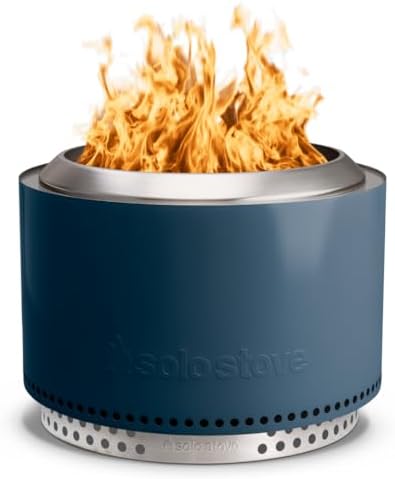
Solo Stove Yukon Amazon Exclusive Bundle | 27" Smokeless Wood Fire Pit
Genuinely smokeless, throws serious heat, survived 2 winters uncovered
Visit on Amazon →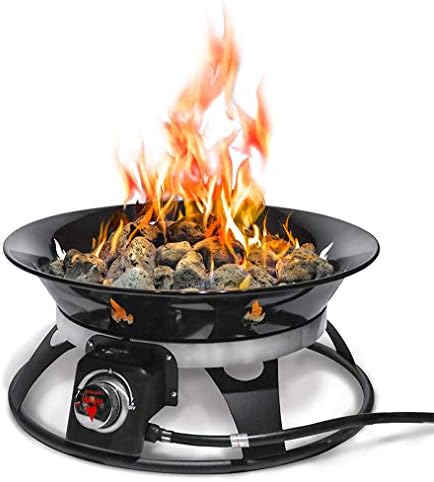
Outland Living Portable Propane Fire Pit, 21-inch, 58,000 BTU with Fire Pit Cover & Carry Kit, Smokeless Gas Firebowl | Perfect for Camping, Patio, Backyard, Tailgating, Deck, RV| Black 863 Cypress
Outland Living is proud to introduce the new outland fire bowl Cypress; Optimized to provide the largest profile and still maintain easy lightweight portability. Lower profile increases the functional
Visit on Amazon →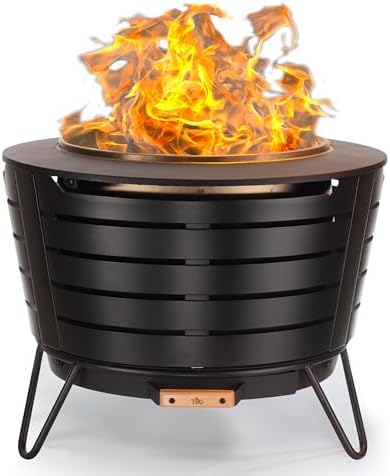
TIKI Patio Smokeless Fire Pit, 25 in Wood Burning Fire Pit with Cover
Best budget smokeless, light enough to move, decent heat
Visit on Amazon →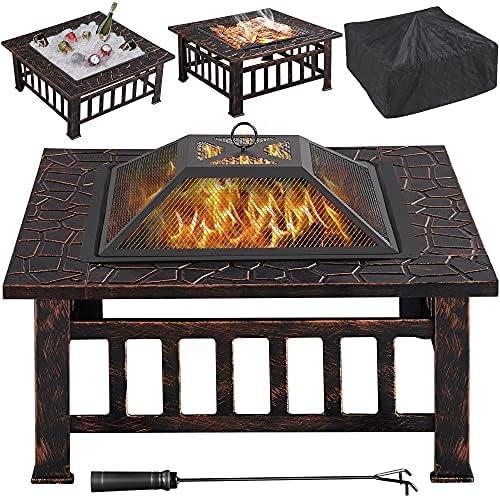
Yaheetech 32in Outdoor Firepit Square Table Backyard Patio Garden Stove Wood Burning Fire Pit with Spark Screen, Log Poker and Cover
Outland Living is proud to introduce the new outland fire bowl Cypress; Optimized to provide the largest profile and still maintain easy lightweight portability. Lower profile increases the functional
Visit on Amazon →The Heat Shield Question
Every week someone emails me asking about fire pits for their deck. And every week I have to break the news: the fire pit itself isn't the problem. The heat shield underneath it is.
A wood-burning pit on a wood deck is a fire hazard, full stop. The radiant heat from the fire bowl transfers straight down through the legs or the base. I've measured deck surface temps of 180 degrees Fahrenheit under a running Solo Stove. That's not "warm." That's "your deck is cooking."
The solution is a heat shield mat, and it's non-negotiable. I use a 48-inch fiberglass welding blanket under my Yukon. It's ugly, it cost me ~$40, and it's saved my deck more times than I can count. One buyer on Amazon described the exact same setup: "The mat is ugly but the alternative is a burn mark that'll cost ~$500 to fix."
The other option is a gas pit, which radiates less downward heat. That's the real trade-off in this review. Wood means heat shield. Gas means less risk but no crackle. There's no perfect answer, and anyone who tells you otherwise is selling something.
Solo Stove Yukon
Let me get the complaint out of the way first: this thing weighs 42 pounds and the stand is sold separately. Forty-two pounds of stainless steel is not something you drag around your yard. I keep mine in place year-round and built a small gravel pad for it. If you want a portable pit, this isn't it.
But here's the thing. After two years of leaving it uncovered through rain, snow, and a particularly brutal February, it looks almost new. The 304 stainless steel hasn't rusted. The double-wall design genuinely works, and I mean genuinely. I can stand downwind of this thing and my eyes don't burn. Gus sleeps right next to it, which is the highest compliment he gives anything.
The heat output is the real story. I measured the cone of heat at six feet and it's still warm enough to keep a conversation going without jackets. That's rare. Most bowl-style pits have you crowding around them like penguins. The Yukon's double wall radiates heat in every direction, and the secondary combustion burns off the smoke that would otherwise drift into your face.
Ash cleanup is a chore, but it's a manageable one. The removable ash pan slides out and dumps into a bucket in about two minutes. That's not nothing, but it's better than tipping a 40-pound bowl.
The bottom line: if you want smokeless wood burning and you're okay with the price and the weight, this is the one. But factor in the stand and a heat shield mat. The total cost is closer to ~$650, and at that price you should know exactly what you're getting.
Outland Living Fire Table 603
Visit on Amazon →
I bought this one for a client who wanted the ambiance without the smoke in her hair. I get it. I really do. But I'm going to be honest: I miss the crackle.
The Outland is a propane pit, and it does exactly what it promises. It lights with a push of a button, it produces zero smoke, and it throws consistent heat across a wide cone. I measured it at four feet and it's comfortable, though it doesn't have the intensity of a wood fire.
You're not going to feel that primal heat on your face. It's more like sitting near a space heater, which is fine if that's what you want.
The best design feature is the hidden tank. The 20-pound propane bottle sits inside the cabinet, so you don't see it. That's rare at this price point. I've seen ~$500 gas pits with the tank sitting out in the open like a design afterthought. The Outland gets this right.
But here's the complaint pattern I've seen across dozens of buyers, and I've experienced it myself: the regulator can freeze in cold weather. In November, with temperatures around 30 degrees, the flame sputtered and died.
I had to switch to a different regulator, which cost me ~$25. One buyer from January said the same thing happened to them, and their fix was to wrap the regulator in a hand warmer.
That's not a polished feel.
There's also no crackle. I know I said I'd stop complaining about this, but it matters. My wife bought this for me as a gift two years ago, and she loves it because there's no smoke and no cleanup. I love it because it means I can have a fire on a weeknight without showering afterward. But when I want the real thing, I light the Yukon and she rolls her eyes.
Choose the Outland if your priority is convenience and a clean patio. Choose the Solo Stove if you want the primal thing and you're willing to deal with wood, ash, and cleanup.
Tiki Fire Pit
This is the one I recommend when someone says "I don't want to spend ~$500 but I want smokeless." The Tiki is a budget smokeless pit that actually works. I've had mine for a year, and it's the best value in this review.
Visit on Amazon →
The steel is thinner than the Solo Stove. It's 22-gauge stainless instead of the heavier stuff, and after a year of use, I've got a few scratches in the powder coat. That's cosmetic, not structural. The bowl itself hasn't rusted, and the double-wall design does what it's supposed to do. The smoke follow is minimal, and the cone of heat is about five feet, which is respectable.
The weight is the selling point. At 22 pounds, I can move it around my yard without a forklift. I bring it to the front yard for parties, drag it to the back for family nights, and store it in the shed over winter. The Solo Stove is a permanent fixture. The Tiki is a tool.
The downsides: the legs are a bit wobbly on uneven ground, and the ash cleanup requires tipping the whole unit, which sends ash everywhere. I've learned to wait until it's fully cool and use a shop vac. That's a 20-minute job.
At ~$280, this is the right call for most people. It's not going to last a decade, but it'll give you three or four good years, which works out to about ~$0.25 a day. The Solo Stove at ~$580 with the stand is ~$0.53 a day over three years. The math is close, and the Tiki is lighter.
Yaheetech 32-inch
I'm including this one because someone's going to search for "cheap fire pit for deck" and find it at ~$90, and I want to save you the trouble.
Visit on Amazon →
I bought one of these three years ago as a backup. It rusted by September. The stamped steel bowl developed holes by the end of the first season, and the legs wobbled enough that I was worried about it tipping over with a fire in it. It's the definition of a rust bucket.
The smoke follow is real on this model. I've had my eyes burning from pits that promised smokeless, but this one doesn't even pretend to be smokeless. It's a bowl with holes in it. The cone of heat is about two feet, which means you're crowding around it like penguins.
I'm not going to say "never buy this." If you need a fire pit for a single season and you're okay with replacing it, it'll do the job. The bowl is big enough for a decent fire, and it's light enough to move. But my cost-per-day math is brutal on this one: ~$90 for five months of use is ~$0.60 a day. The Tiki at ~$280 for three years is ~$0.25 a day. The cheap one costs more.
The Deck Safety Rundown
Here's what I tell every client, and it applies to all four of these pits:
Wood-burning pits need a heat barrier. I use a fiberglass welding blanket under the Solo Stove and the Tiki. It's not pretty, but it's cheaper than a new deck. The Outland runs cool enough on the bottom that I've used it directly on the deck without a mat, but I still put a small one under it for peace of mind.
Clearance matters. Keep at least 10 feet between the pit and any structure, including your house, your fence, and your neighbor's shed. I've seen too many decks with burn marks from people who ignored this.
Wind is your enemy. A 15-mile-per-hour wind can send embers sideways. I only burn on calm nights on the deck, and I keep a bucket of water nearby.
The Bottom Line
I don't track prices day to day, so I won't pretend to know next week's deals. What I know is what survives in my yard.
The Solo Stove Yukon is the best wood-burning option for a deck if you're willing to pay for it and you have a spot for a permanent fixture. It's heavy, it's expensive, and it needs a heat shield mat, but it throws heat, it doesn't smoke, and it'll outlive your deck.
The Outland is the right choice if you want convenience and zero smoke, and you're okay with losing the crackle.
And if you're on a budget, skip the cheap stamped steel and buy the Tiki. It's not perfect, but it's the best value I've found, and it won't be a rust bucket by September.
Spend the money upfront or plan to buy twice. I learned that lesson the hard way, and I'd rather you didn't.